Space-Saving Packing Techniques for Small Flats
Moving out of a small flat can feel like a game of Tetris played under pressure. One minute you've got a tidy little home, the next you're staring at cupboards, under-bed storage, and a hallway that somehow contains more stuff than you remembered owning. That's exactly where Space-Saving Packing Techniques for Small Flats make a real difference. Pack well, and you save box space, protect your belongings, reduce stress, and make moving day feel a lot less chaotic. Pack badly, and even a short move can turn into a fiddly, exhausting mess.
This guide is built for real life, not perfection. You'll find practical methods that work in studio flats, one-bed flats, shared homes, and compact London apartments where every square foot matters. We'll cover how space-saving packing works, the smartest methods to use, the mistakes to avoid, and when it makes sense to bring in professional help such as man and van removals or a full house removals service. Let's get into it.
Table of Contents
- Why Space-Saving Packing Techniques for Small Flats Matters
- How Space-Saving Packing Techniques for Small Flats Works
- Key Benefits and Practical Advantages
- Who This Is For and When It Makes Sense
- Step-by-Step Guidance
- Expert Tips for Better Results
- Common Mistakes to Avoid
- Tools, Resources and Recommendations
- Law, Compliance, Standards, or Best Practice
- Options, Methods, or Comparison Table
- Case Study or Real-World Example
- Practical Checklist
- Conclusion
- Frequently Asked Questions
Why Space-Saving Packing Techniques for Small Flats Matters
Small flats create a very specific packing problem: not only do you have less room to work, you often have less storage furniture too. That means fewer cupboards, fewer wardrobes, and less floor space for staging boxes. So the goal isn't just to pack; it's to pack intelligently. You want to reduce wasted air inside boxes, keep weight manageable, and make sure items survive the move without damage.
There's also the practical side. In a compact flat, clutter gets in the way quickly. A stack of half-packed boxes can block the front door, a badly packed wardrobe carton can split at the bottom, and a couple of loose kitchen items can become a frustrating little avalanche. Truth be told, most moving stress in small homes comes from lack of planning rather than lack of space.
Space-saving packing matters even more if you're moving through narrow stairwells, shared entrances, or busy streets where the van can only stay for a short window. That's one reason people often look into local moving support via removal services or a removals van when things need to be done efficiently. A smarter pack can reduce trips, save time, and make loading easier for everyone.
Key point: in a small flat, good packing isn't about cramming more in. It's about using every inch properly, keeping the load stable, and making each box do a better job.
How Space-Saving Packing Techniques for Small Flats Works
Space-saving packing works by combining three ideas: reducing empty space, choosing the right container, and shaping the load intelligently. Most packing waste comes from air gaps, awkward item shapes, and boxes that are either too big or poorly filled. The better you manage those three things, the more you can fit without overpacking.
For example, soft items like clothing, bedding, and towels can be compressed or used as protective padding. Harder items, such as books or pantry goods, need smaller boxes so they don't become too heavy. Fragile items need structured wrapping, but that doesn't mean heaps of loose paper everywhere. A good method keeps materials tight and intentional.
It also helps to think in layers. Put heavier items low, protect gaps with soft items, and keep frequently needed essentials separate from items you can pack early. In practice, this means one box may contain books at the bottom, folded tea towels in the middle, and a kettle wrapped neatly on top. Simple, but effective. No magic, just sensible order.
Professional movers use a similar principle when preparing for home relocations. If you want a deeper look at how moving support fits into the process, the house movers page is useful for understanding the wider service side of a move.
Key Benefits and Practical Advantages
There's more to space-saving packing than just fitting things into boxes. Done properly, it improves the whole move from start to finish. Here are the main advantages.
- Less box count: better packing means fewer boxes, which usually means easier lifting and less time spent loading.
- Lower risk of damage: items that are packed tightly and sensibly move around less in transit.
- Cleaner unpacking: organised boxes make it easier to settle into your new flat without the usual "where did I put the mugs?" panic.
- Better van use: if space is used efficiently, the van can be loaded more safely and logically.
- Less physical strain: balanced boxes and smart volume control make lifting safer for you and anyone helping out.
There's a hidden benefit too: packing this way helps you decide what is actually worth taking. In a small flat, that tends to be the moment people realise they have three spare phone chargers, two chipped plant pots, and a drawer of cables that may or may not be from 2017. Happens all the time.
If you're comparing service options, it can also be helpful to look at removal company pages or browse removal companies to see what support is available for smaller moves versus larger household relocations.
Who This Is For and When It Makes Sense
Space-saving packing techniques are especially useful if you live in a studio, a one-bedroom flat, a flatshare, or a compact maisonette. They're also helpful if you're moving out of rented accommodation and need to work around a fixed check-out time, shared access, or lift restrictions.
This approach makes sense when:
- you have limited cupboard or wardrobe space
- you need to pack quickly but still carefully
- you are moving on a budget and want to reduce box and tape waste
- you're handling the move yourself or with a small team
- you need to keep essential items accessible during the first night
It also suits people with awkward belongings: folding bikes, kitchen appliances, gaming gear, records, art prints, or a mix of soft and rigid household items. Small spaces often contain oddly sized things, and those are the ones that cause trouble if you just throw everything into standard boxes.
And if your move is within London or a nearby town, local access can matter more than people expect. Routes, parking, stairs, and loading points all influence how carefully you need to pack. That's why many customers use removals near me searches to find a service that understands local conditions, not just the postcode on the label.
Step-by-Step Guidance
Here's a practical packing process that works well for small flats. Nothing fancy, just a clear sequence that saves space and reduces last-minute chaos.
1. Start with a ruthless sort-out
Before you pack anything, split belongings into four groups: keep, donate, recycle, and bin. Small flats punish indecision. If you are not using it, wearing it, or actively wanting it, question whether it deserves space in the van. Be honest here. Saves a lot of grief.
2. Measure the awkward stuff
Check the size of items like lamps, mirrors, drying racks, monitors, and kitchen gadgets. These are usually the things that don't fit neatly into ordinary cartons. Knowing their dimensions helps you match them to the right box or wrap them for transport without wasteful overboxing.
3. Choose the right box sizes
Use smaller boxes for heavy items and medium boxes for mixed or soft items. Avoid making one giant box the answer to everything. That way lies regret, back strain, and a box that sounds like it contains bricks.
4. Use soft items as built-in padding
Towels, socks, scarves, bedding, and jumpers can protect breakables while saving space. Wrap mugs in tea towels. Fill empty corners in boxes with T-shirts. Use cushions carefully for bulky but light items. You are packing smarter, not buying extra packaging you don't need.
5. Compress clothing without crushing it
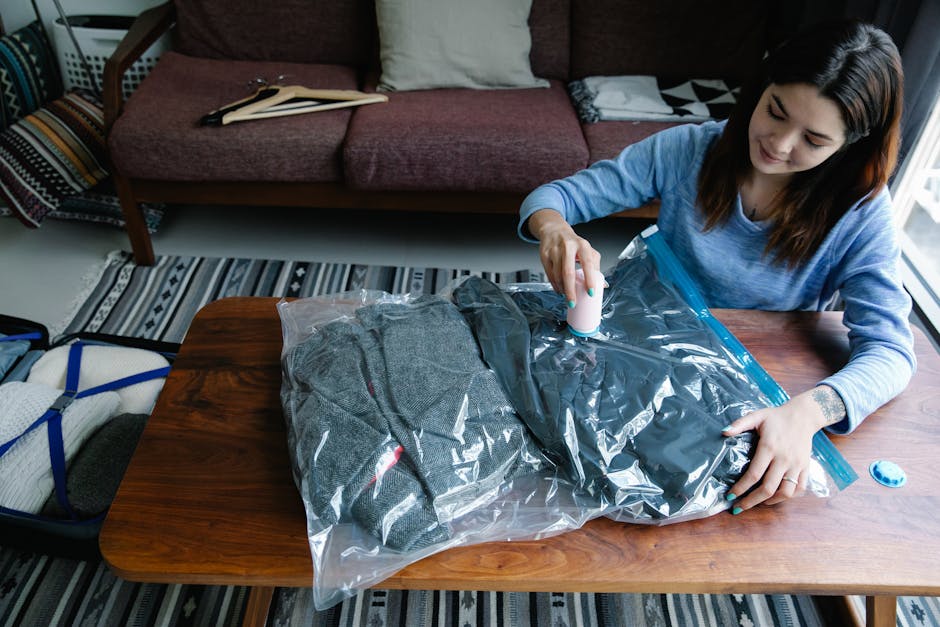
Clothes can be folded vertically, rolled, or packed into vacuum bags if you know they'll stay compressed for the move. Vacuum bags are especially useful for coats, duvets, and spare bedding. Just don't overdo it with delicate fabrics that wrinkle badly or need airing.
6. Nest items where it makes sense
Some household items fit inside one another: bowls inside bowls, measuring cups inside larger containers, pans with soft inserts, storage boxes inside larger storage boxes. Nesting can save a surprising amount of space, but only if items are stable and not likely to scratch. A little tissue or cloth between surfaces usually does the trick.
7. Pack by room and by first-use priority
In a small flat, room-based packing helps you unpack faster. But within each room, separate the items you'll need immediately from the items you won't. Keep essentials such as chargers, toiletries, medication, tea bags, and a change of clothes in one clearly marked bag. You'll thank yourself later, probably around 9 p.m. when the kettle still isn't unpacked.
8. Label sides, not just tops
When boxes are stacked in a van or hallway, the top label often disappears. Mark the sides clearly with room names and a short contents note. If the box is fragile or needs upright placement, say so. This small habit makes a big difference when people are moving quickly.
9. Fill voids so boxes stay rigid
Loose space inside boxes causes collapse and shifting. Fill voids with soft items, packing paper, or small clothing pieces. The aim is a snug, stable box that doesn't bulge at the top or cave in at the sides.
10. Keep a loading plan in mind
Pack with the van in mind. Heavy, square boxes are easier to stack; awkward shapes should be grouped and secured. If you're hiring a moving vehicle or booking a moving van, ask how the load will be arranged so you can keep related items together and avoid frantic reshuffling on the pavement.
Expert Tips for Better Results
Once you have the basics down, a few small adjustments can make the packing process much smoother.
- Pack vertical where possible: books, file folders, and some kitchen items fit better standing upright than lying flat.
- Use suitcases strategically: they are perfect for heavier clothing, shoes, and documents. Wheels are your friend here.
- Keep cables together: twist ties or reusable cable wraps stop small items from vanishing into the moving black hole.
- Don't mix too many item types: a box full of random things is harder to unpack and more likely to waste space.
- Leave one "open first" bag: this should contain the basics for the first 24 hours, including toiletries, phone charger, snacks, and keys.
One thing people often overlook is flat-pack furniture packaging. If you still have the original boxes for small shelves, desks, or kitchen pieces, they can be reused for storage and moving, but only if the cardboard is still sturdy. Otherwise, it's better to strip furniture down and wrap components separately.
Also, if you know you'll need help with loading from a narrow street or a compact block, ask about a man with a van style service. For smaller homes, that can be a very sensible fit. Not always, but often.
Common Mistakes to Avoid
Small flats can make packing errors feel much bigger than they are. A few common mistakes are worth avoiding from the start.
- Overfilling large boxes: this leads to crushing, strain, and unstable stacking.
- Leaving hollow spaces: empty gaps mean movement, and movement means damage.
- Packing by panic: grabbing items at random is a fast way to lose track of essentials.
- Using weak tape or tired boxes: if the bottom looks suspicious, trust your instincts and replace it.
- Forgetting weight balance: a light top and heavy bottom is safer than the other way around.
- Ignoring access routes: tight staircases, narrow lifts, and shared landings need more thought than a ground-floor house move.
Another classic mistake is packing the only scissors, tape dispenser, or kettle inside the last box without realising it. It sounds funny after the fact. Not so funny while standing in a half-empty kitchen at 7 a.m.
Tools, Resources and Recommendations
You do not need a huge kit to pack well, but a few good tools make a noticeable difference.
| Tool | Best use | Why it helps in a small flat |
|---|---|---|
| Small and medium boxes | Books, kitchenware, mixed items | Prevents overpacking and makes lifting easier |
| Packing paper or tissue | Fragile protection | Fills gaps without adding much bulk |
| Reusable tote bags | Light soft goods | Ideal for towels, bedding, and quick-access items |
| Vacuum storage bags | Clothes and bedding | Reduces volume dramatically for soft items |
| Strong tape | Sealing boxes securely | Stops box failure in transit |
| Labels or markers | Room and contents labelling | Speeds up unloading and unpacking |
If you're working with a professional team, it is worth checking their service scope early. Some customers only need transport, while others need loading, packing help, or both. A clear page such as removal van or man with van removal can help you judge whether the setup matches your move.
You may also want to review pricing and quotes before booking anything. For small flats, transparent pricing matters because the job size can vary a lot depending on stairs, distance, packing help, and access.
Law, Compliance, Standards, or Best Practice
For a typical home move, there is usually no special legal rule that dictates exactly how you must pack your flat. That said, there are sensible UK best practices worth following, especially around safety and transport.
Manual handling: avoid lifting boxes that are too heavy or awkward. If something feels unsafe to carry, split it into smaller loads. That's not being cautious for the sake of it; it's practical common sense.
Fire and escape routes: in flats, especially in shared buildings, keep hallways and exits clear while packing. Don't block communal routes with stacked boxes. It matters more than people think, and some building managers are understandably strict about this.
Fragile and hazardous items: items such as cleaning chemicals, aerosols, batteries, and sharp tools need separate judgment. Follow product guidance and common-sense storage rules. If in doubt, ask your mover or check the manufacturer's instructions.
Insurance and care: if you're using a professional service, it's wise to understand what cover is included and what your own contents insurance may require. For general reassurance, the site's insurance and safety information is a useful place to start.
You may also want to read the health and safety policy and recycling and sustainability pages, especially if you're trying to dispose of packaging responsibly after the move. Small moves still generate waste, and it's better to think about that up front rather than with a pile of bubble wrap on the floor later.
Options, Methods, or Comparison Table
There are a few different ways to approach packing a small flat. The best one depends on how much time, space, and help you have.
| Method | Best for | Pros | Trade-offs |
|---|---|---|---|
| Rolling clothing | Soft items and everyday wear | Saves space, quick to sort | Not ideal for delicate fabrics |
| Vacuum bagging | Bedding, coats, seasonal clothes | Major volume reduction | Can over-compress some fabrics |
| Nesting containers | Kitchenware and storage items | Excellent use of empty space | Needs careful cushioning |
| Room-by-room boxing | Unpacking speed and organisation | Easy to label and track | Can use more boxes if not planned well |
| Essentials-first packing | Fast moves and short notice | Reduces first-night stress | Needs discipline to keep essentials separate |
For many small-flat moves, the best answer is a mix of all five. To be fair, that's usually how real life works anyway. One method alone rarely solves everything.
Case Study or Real-World Example
Here's a realistic example. A tenant moving from a compact one-bed flat in South West London had a surprisingly full place: books, kitchen gear, winter coats, a desk setup, and enough random household items to fill several cupboards. The flat itself was small, but the volume of belongings was not.
The packing approach started with a declutter session. Duplicate cookware went, unused decor went, and several boxes of "maybe useful one day" items were sorted properly. After that, soft goods were compressed into vacuum bags, books were packed into small boxes, and fragile kitchen items were wrapped using towels and packing paper rather than loose, oversized filler.
The biggest difference came from organisation. Essentials were kept in one clear bag, electronics were separated carefully, and each box was labelled on the side. The move felt less frantic because there was no mid-day guessing game. That matters when you're carrying things down two flights of stairs and your landlady is already asking for a final inspection time.
The person also booked a compact transport option through a local man and van removals service, which suited the size of the move well. No unnecessary van space, no wasted trips, and no giant vehicle trying to squeeze into a street that barely had room for one side of parking. Sometimes simple is best.
Practical Checklist
Use this checklist as a final run-through before moving day.
- Sort belongings into keep, donate, recycle, and bin
- Collect sturdy small and medium boxes
- Label all boxes by room and contents
- Use towels, bedding, and clothing as padding where sensible
- Pack heavy items into smaller boxes
- Use vacuum bags for bedding and seasonal clothing
- Keep essentials in a separate overnight bag
- Protect fragile items with enough cushioning, but not too much bulk
- Seal boxes securely and check the base
- Keep hallways and exits clear while packing
- Check access, parking, and lift arrangements in advance
- Confirm your transport or mover booking early
Expert summary: the best packing strategy for a small flat is not to "fit everything in" at any cost. It is to reduce waste, control weight, protect your items, and make the move easier to load, carry, and unpack. A little planning now saves a lot of scrabbling later.
Conclusion
Space-saving packing for small flats is really about calm thinking under pressure. Once you start using the right box sizes, smart compression, careful nesting, and good labelling, the whole process becomes far more manageable. You don't need to be perfect. You just need a system that respects the limits of small spaces and makes life easier on moving day.
Whether you're moving across town or just a few streets away, these techniques help you stay organised, save space, and avoid those awkward last-minute surprises that always seem to happen at the worst possible moment. And if you'd like a hand with the move itself, it may be worth exploring local support, comparing service options, and choosing a team that understands compact homes and tight access.
Get a free quote today and see how much you can save.
It's a small step, but it can make the whole move feel a lot lighter.
Frequently Asked Questions
What are the best space-saving packing techniques for small flats?
The most effective techniques are decluttering first, using smaller boxes for heavy items, compressing soft goods with vacuum bags, nesting similar items, and filling empty spaces with clothing or towels. The goal is to reduce wasted air and keep loads stable.
Should I use large boxes in a small flat move?
Large boxes can be useful for light items like bedding, but they are usually a poor choice for heavy belongings. In small flats, smaller and medium boxes are usually safer, easier to carry, and more efficient to stack.
How do I pack clothes to save the most space?
Roll everyday clothes, fold items vertically in suitcases or boxes, and use vacuum storage bags for bulky seasonal clothing or bedding. Keep delicate fabrics separate so they do not get crushed or over-compressed.
Can I use towels and bedding as packing material?
Yes, absolutely. Soft items such as towels, jumpers, socks, and bedding can protect fragile objects while reducing the need for extra filler. Just make sure the items are clean and not likely to snag delicate surfaces.
What should go in my first-night box?
Pack toiletries, a phone charger, medication, a change of clothes, basic kitchen items, snacks, toilet paper, keys, and any documents you need quickly. Keep it separate and easy to find.
How do I stop boxes from collapsing?
Avoid leaving empty gaps, don't overfill boxes with heavy items, and always use strong tape on the base. Boxes should feel snug but not bulging. If the cardboard is soft or damaged, replace it.
Is it worth hiring a man and van for a small flat move?
Often yes, especially if access is tight, parking is difficult, or you only have a modest amount of furniture. Services such as man with a van can be a practical fit for smaller moves, but it depends on the volume and the layout of your building.
How far in advance should I start packing a small flat?
If possible, start 2 to 3 weeks before moving day, beginning with non-essential items. If you're short on time, focus first on seasonal items, books, decor, and anything you won't need until after the move.
What items should never be packed together?
Don't pack sharp tools loosely with fragile items, and avoid mixing cleaning chemicals with clothing or food goods. Batteries, aerosols, and liquids should be treated carefully and stored according to product guidance.
How can I save space in the kitchen when packing?
Nest bowls and measuring cups, wrap glassware inside tea towels, and pack smaller appliances in their own boxes if needed. Use soft items to fill gaps so things do not rattle around in transit.
Do I need special packing supplies for a flat move in London?
Not special, but sturdy ones help. Small flats in London often involve stairs, parking limits, and narrow hallways, so strong boxes, reliable tape, and clear labels are more useful than fancy materials. If you need a service that works well locally, browsing removal services or removal company options can help you choose.
What is the biggest mistake people make when packing a small flat?
The biggest mistake is waiting too long and then packing in a rush. Once that happens, people overfill boxes, lose track of essentials, and waste space. A simple plan, started early, almost always produces a better result.
Are recycling and disposal options important before packing?
Yes. Reducing unwanted items before the move saves space, lowers packing time, and makes unpacking easier. It also helps if you want to dispose of packaging responsibly afterwards, which is why pages like recycling and sustainability can be genuinely helpful.